It is not a berry
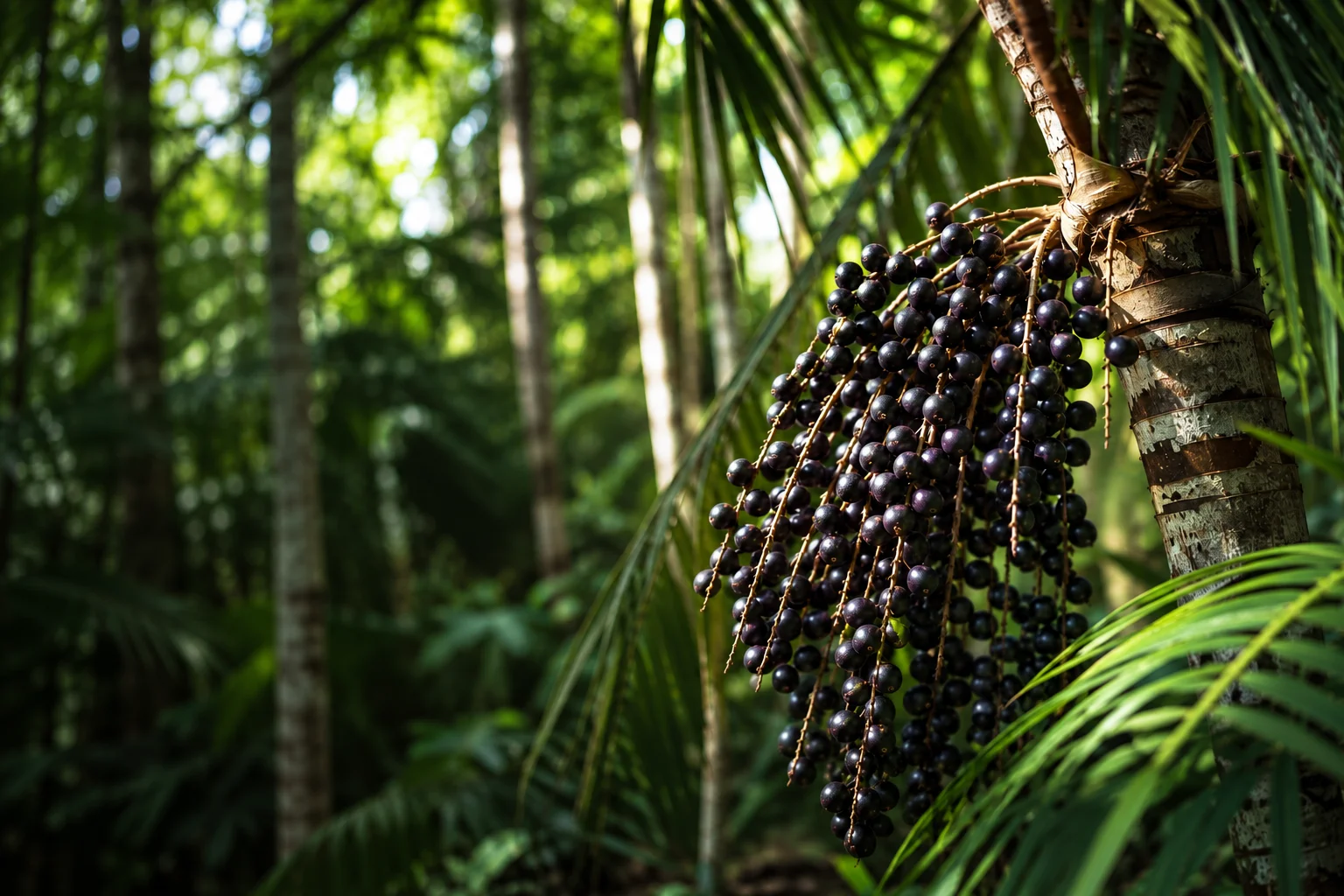
Açaí (pronounced ah‑sah‑EE) is the fruit of a slender Amazonian palm, Euterpe oleracea. Despite the name, it is a stone fruit, botanically closer to a cherry or an olive than to a blueberry.
The pit takes up the great majority of each fruit. What surrounds it is a thin layer of deep purple pulp, which is the only part anyone eats.
It grows in flooded forest
The palms grow in the tidal floodplains of the Amazon estuary, mostly in northern Brazil, where the ground is wet for much of the year. They are tall and thin, and the fruit grows in heavy clusters near the crown.
Harvesting is still done largely by hand, by climbing the trunk and cutting the clusters down. It is skilled work, and it has been part of life along those rivers for a very long time.
It does not travel fresh
Once picked, açaí begins to deteriorate within about a day. There is no practical way to ship the fresh fruit any distance.
That single fact explains the entire market. Açaí is pulped near where it grows and then frozen or bottled, which is why you meet it as a puree, a powder or a juice rather than as fruit in a produce aisle.
It does not taste sweet
People expect grape or blackberry and get something else. On its own the pulp is earthy and faintly bitter, closer to unsweetened cocoa, with very little sugar of its own.
It is also unusually oily for a fruit, which is where its texture comes from. Nearly every açaí product you have tasted has had something else added for sweetness.
The color is the point
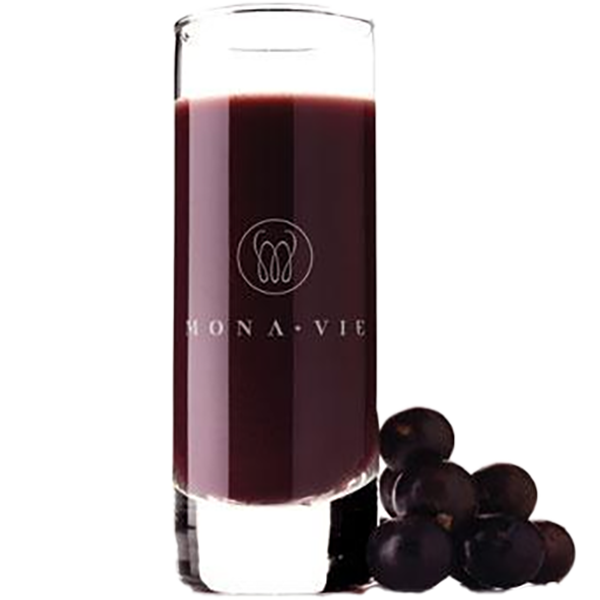
That dark purple comes from anthocyanins, the same family of plant pigments that colors blueberries, blackcurrants and red cabbage.
In açaí they are concentrated in the skin and the thin pulp, which is why the color is so intense in so little fruit.
Where ours comes from
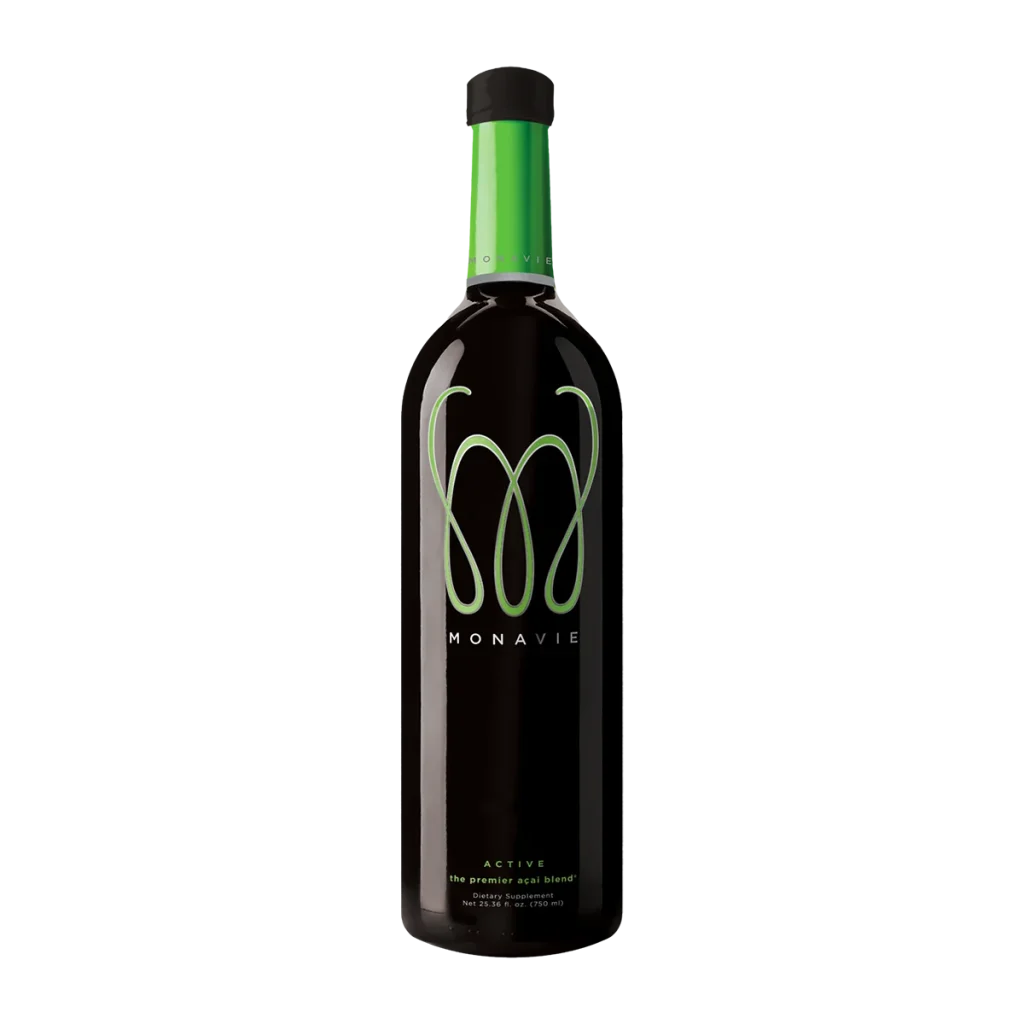
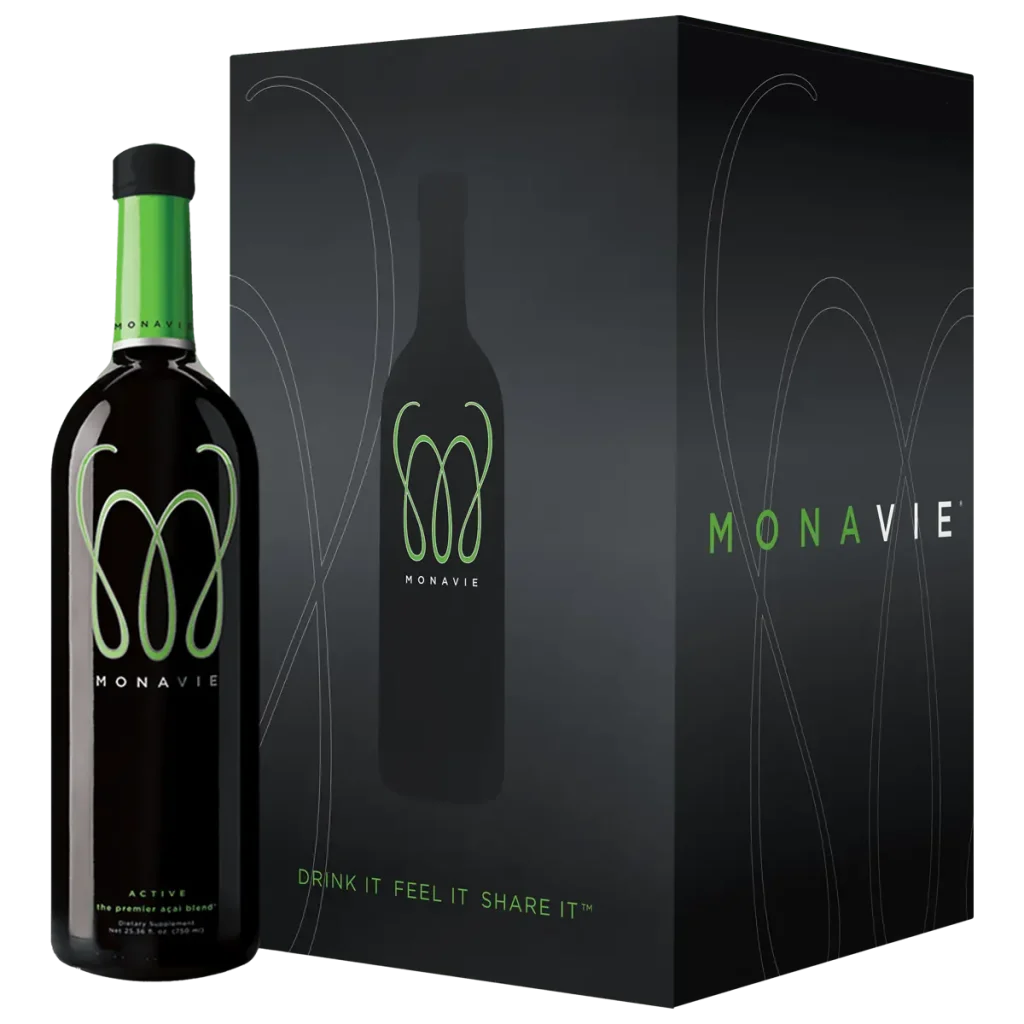
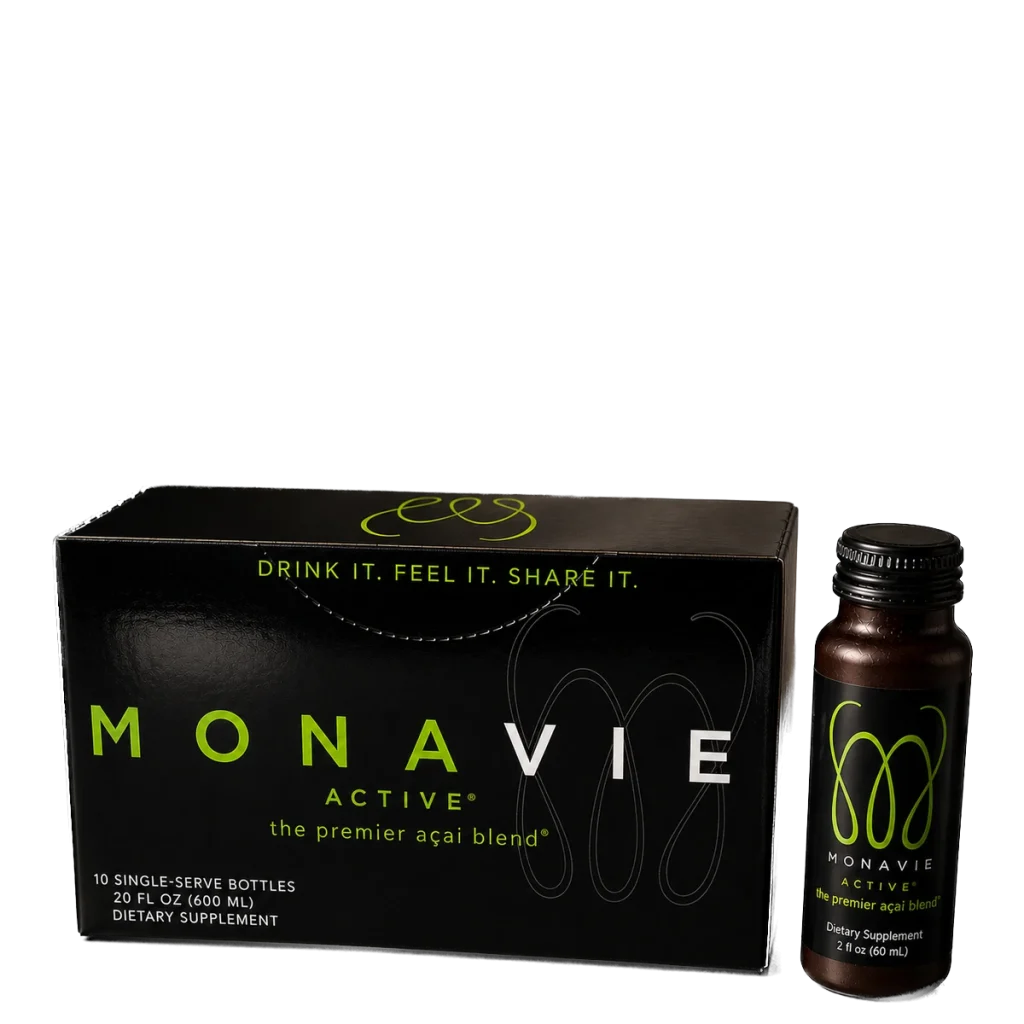
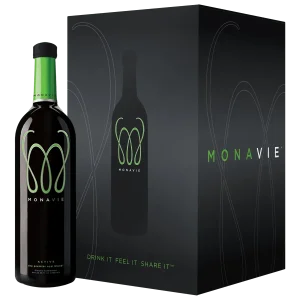
Monavie Active contains wild‑harvested açaí and plant‑based glucosamine, blended with 18 other fruits.
We have offered it since 2005, shipped from Gainesville, Florida.